
 Image 1 of 1
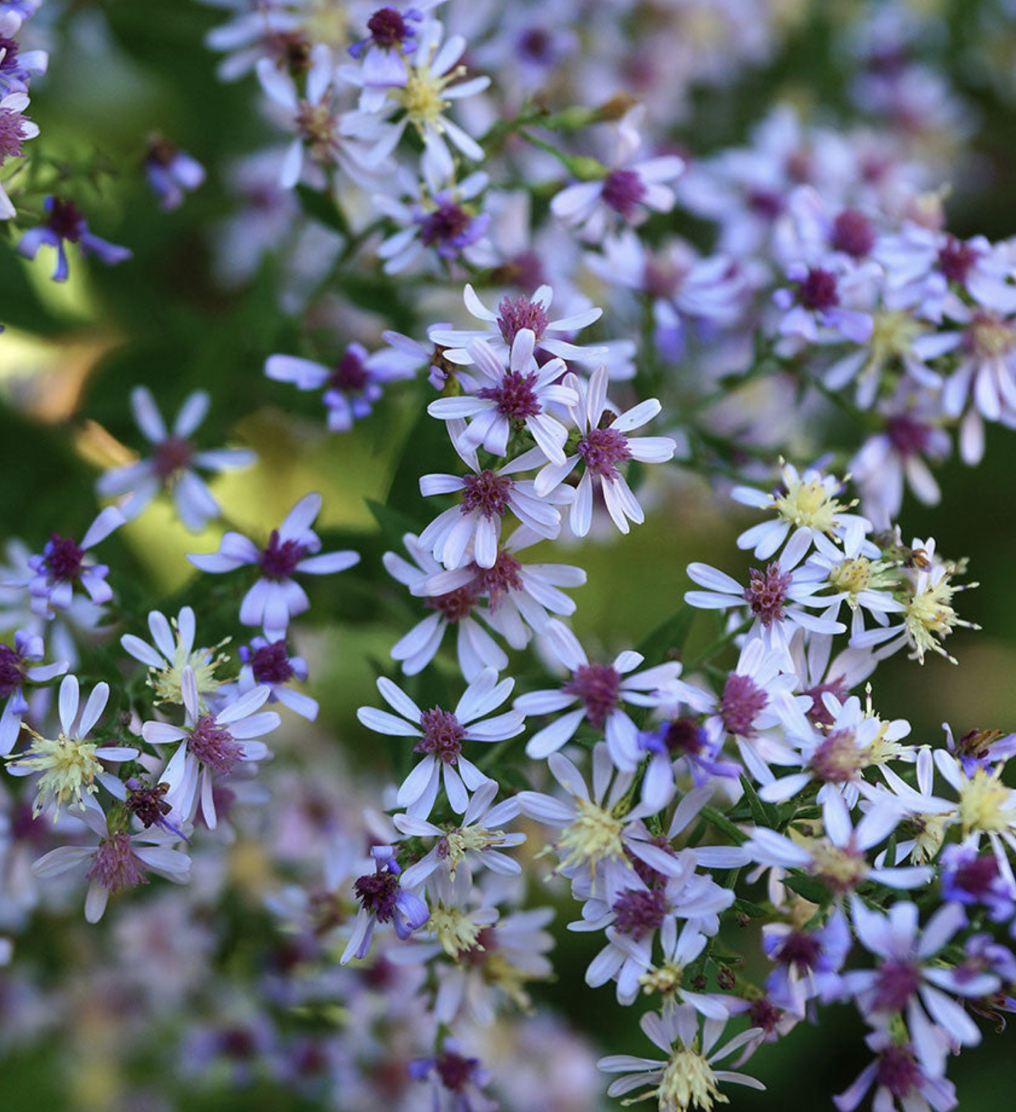
This is the last bloomer in my garden, sometimes blooming through November! It is covered with pollinators the entire time. The yellow center of an aster flower is a rich source of pollen and nectar for pollinators like bees, signaling it's ready for visitors; after pollination, the center changes color (to brown or reddish) to indicate it's been visited, guiding pollinators to fresh, yellow flowers, which boosts efficiency for both the insect and the plant. Research by entomologist Doug Tallamy of University of Delaware lists asters and goldenrods as the wildflowers that support the most species of butterflies and moths. This species can thrive in full shade and is highly recommended for late season pollen in the woodland garden.